SEO vs generative engine optimization (GEO): What Changes in AI Search
- Jowita Chmura
- Ai brand visibility
- Published
- 08 Mins read
SEO vs generative engine optimization is a measurement decision: use SEO to make pages discoverable, and use GEO to check whether AI answers mention, cite, and compare your brand accurately. If you’re responsible for growth, don’t replace SEO with GEO; add prompt monitoring, citation analysis, answer accuracy checks, and competitor visibility to the SEO workflow.
The mistake most teams make is treating GEO as keyword stuffing with a new acronym. The problem is not that Google is old and AI is new. The problem is that classic rankings, generated answers, citations, competitor mentions, and prompt-level visibility are different measurement problems.
The short version
SEO is still the base layer. If your pages cannot be crawled, indexed, understood, or linked internally, you have a discoverability problem before you have a GEO problem.
Generative Engine Optimization, often called GEO or AI SEO, adds a second layer: how answer engines such as ChatGPT, Perplexity, Gemini, Claude, Copilot, Grok, and Google AI features represent your brand when someone asks a question.
That means the useful question changes.
Classic SEO asks: “Can this page rank for the query?”
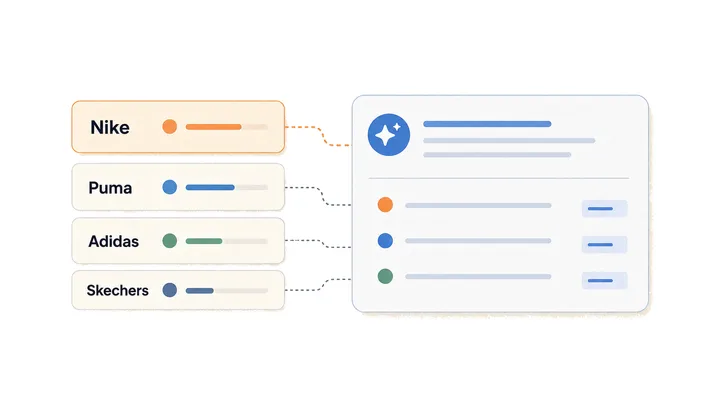
GEO asks: “When this buyer asks an AI system for a recommendation, comparison, or explanation, does the answer mention us, cite us, describe us accurately, and include the right competitors?”
[Reality Check]: GEO does not give you a control panel for AI answers. It gives you a measurement and improvement workflow for prompts, sources, citations, entity clarity, and competitor visibility.
What SEO still does
Search Engine Optimization is the work of making a site easier for search engines and users to find, understand, and trust. The work still includes technical accessibility, useful content, internal links, page experience, structured data where it fits, and pages that answer real queries.
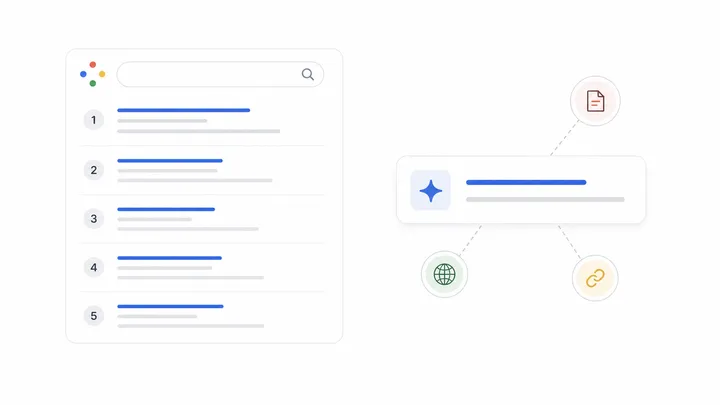
Google says the same SEO fundamentals still apply to AI features in Search, including AI Overviews and AI Mode: there are no special requirements to appear, and pages still need to be eligible for Google Search with a snippet. Google’s guidance also says AI Overviews and AI Mode may use query fan-out, where the system issues related searches across subtopics and data sources before generating a response. That matters because AI search does not always map cleanly to one keyword and one ranking page. Source: Google Search Central guidance on AI features.
For a SaaS team, SEO still covers:
- product and feature pages that explain what the product does;
- comparison and alternatives pages for high-intent searches;
- technical crawlability, indexability, and clean page templates;
- internal links that connect topic clusters and commercial pages;
- content that earns links, mentions, and repeat visits.
This is why “SEO is dead” is lazy advice. If an AI system uses web search, source links, or public documents to build an answer, the quality and accessibility of those public documents still matter.
What GEO adds
GEO focuses on visibility inside generated answers. The output is not just a ranked blue link. It may be a paragraph, a shortlist, a comparison table, a cited answer, a shopping recommendation, or a follow-up conversation.
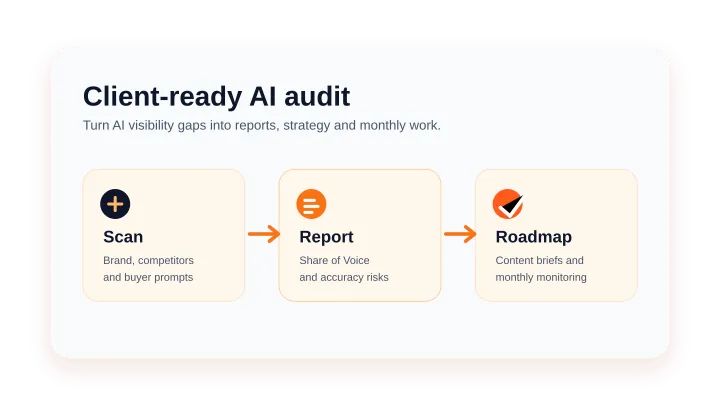
For AI Brand Scan, the practical version of GEO is not “make ChatGPT say our name.” It is:
- define the prompts buyers actually ask;
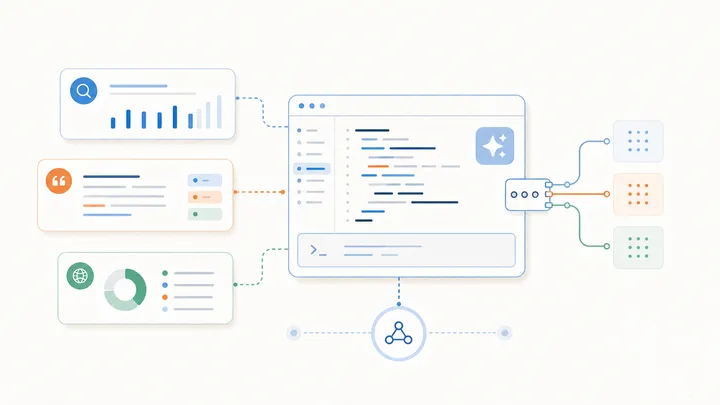
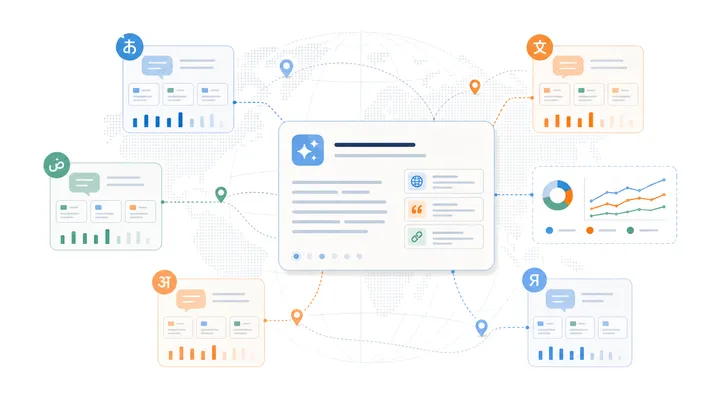
- run those prompts across relevant answer engines;
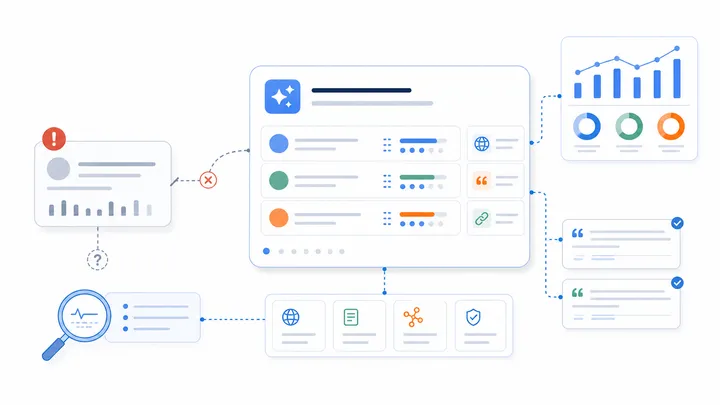
- record brand mentions, omissions, citations, competitor mentions, and answer accuracy;
- identify which sources appear to shape the answers;
- turn those gaps into content, source, entity, and positioning work;
- remeasure over time.
OpenAI’s ChatGPT search announcement describes ChatGPT search as a way to provide answers with links to relevant web sources, and OpenAI’s crawler documentation separates OAI-SearchBot for search features from GPTBot for training and ChatGPT-User for user-triggered actions. Sources: OpenAI on ChatGPT search and OpenAI crawler documentation.
That crawler distinction is not trivia. A marketing team can accidentally turn an AI visibility discussion into a vague “block or allow AI” argument. The better question is more operational: which bots are allowed, which pages are accessible, which sources are answer-ready, and which prompts should be monitored?
SEO vs GEO: the practical difference
| Area | SEO | GEO / AI SEO |
|---|---|---|
| Main unit | Keyword, page, ranking, click | Prompt, answer, mention, citation, competitor |
| Primary surface | Search results page | Generated answer, cited summary, comparison, shortlist |
| Measurement | Ranking, impressions, clicks, conversions | Mentions, citations, share of voice, answer accuracy, source patterns |
| Failure mode | Page does not rank or attract clicks | Brand is absent, misdescribed, uncited, or outranked by competitors in AI answers |
| Content work | Pages that satisfy search intent | Source-backed, structured, answer-ready pages that clarify entity, category, proof, and comparisons |
| Reporting | Search Console, rank tracking, analytics | Prompt benchmarks, answer snapshots, citation analysis, competitor visibility tracking |
The overlap is large. Strong SEO pages can support GEO because they create crawlable, useful, linked information. But GEO adds questions traditional rank tracking does not answer.
For example:
- Does ChatGPT mention your product when someone asks for “best tools for AI brand monitoring for B2B SaaS”?
- Does Perplexity cite your guide, a competitor page, or a third-party list?
- Does Google AI Mode surface your comparison content or skip straight to better-known competitors?
- Does the answer describe your product accurately, or does it repeat an old positioning claim?
This is where an AI visibility prompt library or a DIY AI SEO brand audit becomes more useful than a generic article rewrite. You need repeatable prompts before you can talk about improvement.
The deep dive: prompts, sources, and citations
The most useful GEO work starts after you stop asking one-off questions.
One screenshot from ChatGPT is a clue. It is not a benchmark. AI answers can vary by model, time, location, search trigger, prompt wording, and available sources. A serious workflow uses prompt groups, repeated runs, and notes on which sources appear in the answer.
Start with five prompt types:
- Category prompts: “What are the best AI brand monitoring tools for SaaS teams?”
- Problem prompts: “How can I find out why AI search recommends my competitors?”
- Comparison prompts: “AI Brand Scan vs other AI visibility tools.”
- Use-case prompts: “How should an agency report AI search visibility to clients?”
- Reputation prompts: “What does AI say about [brand]?”
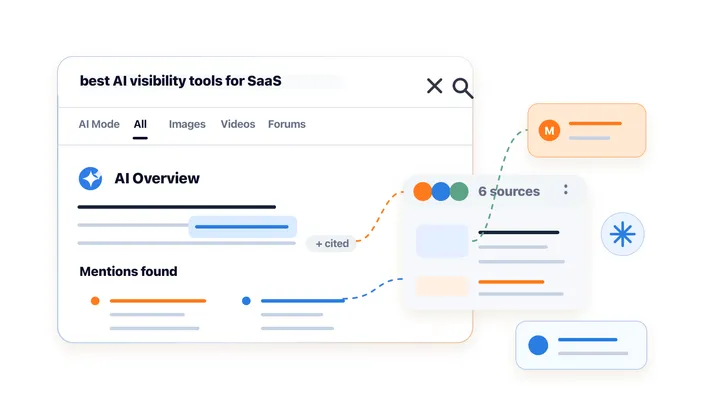
Then track the answer in four columns:
- Mention: is the brand named?
- Citation: is the brand, product page, blog post, or third-party source cited?
- Accuracy: is the description current and specific?
- Competitors: who else appears, and what reason does the answer give?
This is where friction shows up. The page that ranks in Google may not be the page an answer engine cites. A brand may appear in one answer and disappear in another. A comparison page may be too thin to support a recommendation. A third-party list may describe the product better than the product site does. A stale source can keep an old narrative alive.
GEO work should not start with “write more AI content.” It should start with evidence from prompts and sources.
What to keep from classic SEO
Keep the boring parts. They still do work.
Technical SEO matters because answer engines and search systems still need accessible pages. Internal links matter because they help users and crawlers discover related pages. Clear titles and descriptions matter because they frame what a page is about. Structured content matters because it gives both humans and machines clean sections to inspect.
For this topic, internal links should point readers toward action:
- use AI SEO monitoring when the reader needs recurring tracking;
- use an AI brand visibility audit prompt when they need a first benchmark;
- use the GEO content roadmap prompt when they already found gaps;
- use competitor visibility gap analysis when competitors dominate answer sets.
Internal links are not just SEO housekeeping here. They turn the article from a definition page into a path: learn the concept, test visibility, find gaps, build a roadmap.
What to change for GEO
GEO asks for more explicit evidence than many SEO articles provide.
Do this:
- Put the direct answer near the top of the page.
- Use clear definitions for SEO, GEO, AEO, LLMO, answer engine, citation, and AI search visibility.
- Add comparison tables where the buyer is choosing between tools, products, or approaches.
- Support claims with primary sources, official docs, research, or first-party observations.
- Keep product, pricing, feature, and competitor claims current.
- Build pages that answer buyer prompts, not just exact-match keywords.
Avoid this:
- promising guaranteed AI mentions;
- rewriting a page only to add “ChatGPT” and “AI SEO” everywhere;
- publishing unsupported market-size claims;
- treating one AI answer as proof of a trend;
- ignoring third-party sources that AI systems may cite instead of your own site.
The uncomfortable part is that some GEO work happens outside your website. If AI answers cite review sites, documentation, partner pages, community threads, or competitor comparisons, an owned blog post may not be enough. You may need better third-party proof, clearer product pages, fresher documentation, and more accurate comparison content.
There is also a maintenance cost. Once you define a prompt benchmark, someone has to own it. Prompts need to be reviewed when the product changes, competitors reposition, a new answer engine matters to the buyer, or a source starts describing the category badly. Without ownership, GEO becomes another quarterly screenshot exercise: interesting in a meeting, useless for prioritization.
A practical workflow for teams
Use this sequence before rewriting pages for GEO:
- Pick one business area, such as a product category, use case, or competitor set.
- Build 10 to 25 buyer-intent prompts across discovery, comparison, problem, and reputation queries.
- Run the prompts across the answer engines your buyers are likely to use.
- Capture mentions, citations, competitors, answer accuracy, and source URLs.
- Group the gaps: missing entity clarity, weak comparison content, stale third-party source, thin use-case page, blocked crawler, or poor internal links.
- Rewrite the highest-impact pages with direct answers, evidence, tables, and clear source support.
- Recheck the same prompt set after enough time has passed for crawling and answer behavior to change.
If you want a structured starting point, run an AI brand visibility audit first. If you already know competitors are getting named more often than you, start with competitor visibility gap analysis.
For reporting, keep the first version small. A 15-prompt benchmark with clean notes is better than 100 prompts nobody trusts. Show leadership where the brand is absent, where competitors are framed better, which citations keep appearing, and which pages or sources should be fixed first. That’s the bridge between “AI SEO sounds interesting” and “we know what to publish next.”
FAQ
Is GEO the same as AI SEO?
In most marketing conversations, GEO and AI SEO point to the same broad problem: improving visibility in AI-generated answers. GEO is the more specific term when the focus is generated answers, citations, and answer-engine behavior. AI SEO is the broader umbrella people use when they connect classic SEO work to AI search visibility.
Does GEO replace SEO?
No. SEO remains the base layer for crawlable, useful, discoverable content. GEO adds prompt monitoring, answer analysis, citation tracking, source strategy, and competitor visibility.
Can GEO guarantee that ChatGPT, Perplexity, or Google AI features mention my brand?
No. Treat any guaranteed mention claim as a red flag. GEO can improve the public evidence around your brand, make content easier to understand and cite, and help you measure answer patterns. It cannot force a model or search system to recommend you.
What should a team measure first?
Start with prompt benchmarks. Track brand mentions, competitor mentions, citations, answer accuracy, and source patterns. Rankings and clicks still matter, but they do not show whether your brand appears inside AI-generated shortlists.
What to do next
If you already have SEO coverage, do not start by rewriting everything for AI. Start with measurement.
Run a small prompt benchmark for one product category. Check whether your brand is mentioned, cited, and described correctly. Then turn the gaps into a focused GEO roadmap: source fixes, comparison pages, internal links, answer-ready summaries, and third-party proof.
AI Brand Scan is built for that workflow: scan your brand, compare answer-engine visibility against competitors, and turn prompt evidence into practical content priorities. Start with a free AI visibility scan or build a recurring monitoring workflow with AI SEO monitoring.